


This story portrays one of the earliest confrontations of the Cold War, demonstrating how far America was willing to go to keep West Berlin free from Soviet tyranny. Because of America’s dedication (and Great Britain’s), the citizens of West Berlin preserved their freedoms and eventually thrived, though completely surrounded by the socialism of East Berlin and East Germany. Prosperous West Berlin and impoverished East Berlin provide a stark contrast between free enterprise capitalism and Marxist communism. This is captured most dramatically in the story: “Although the children had been on meager rations, they were more concerned with freedom than flour. They wanted what Hal had always had – the opportunity to pursue their dreams.”
American exceptionalism is also on display in the character of bomber pilot Hal Halvorsen. Acting solely on his own initiative and generosity, he organized the “candy bombing” which helped win the hearts and minds of our former WWII adversaries. From inside a military hierarchy, Halvorsen created a “voluntary association” of fellow pilots and airmen that was so successful top brass made it official policy.
Appropriately, the story is set during Christmastime, emphasizing the charitable theme and connecting us to America’s devout religious heritage (Christmas From Heaven). Americans are the most generous people on Earth in terms of giving and this story does a marvelous job of demonstrating that generosity as Halvorsen’s initial efforts sparked candy donations by individuals and corporations across America.
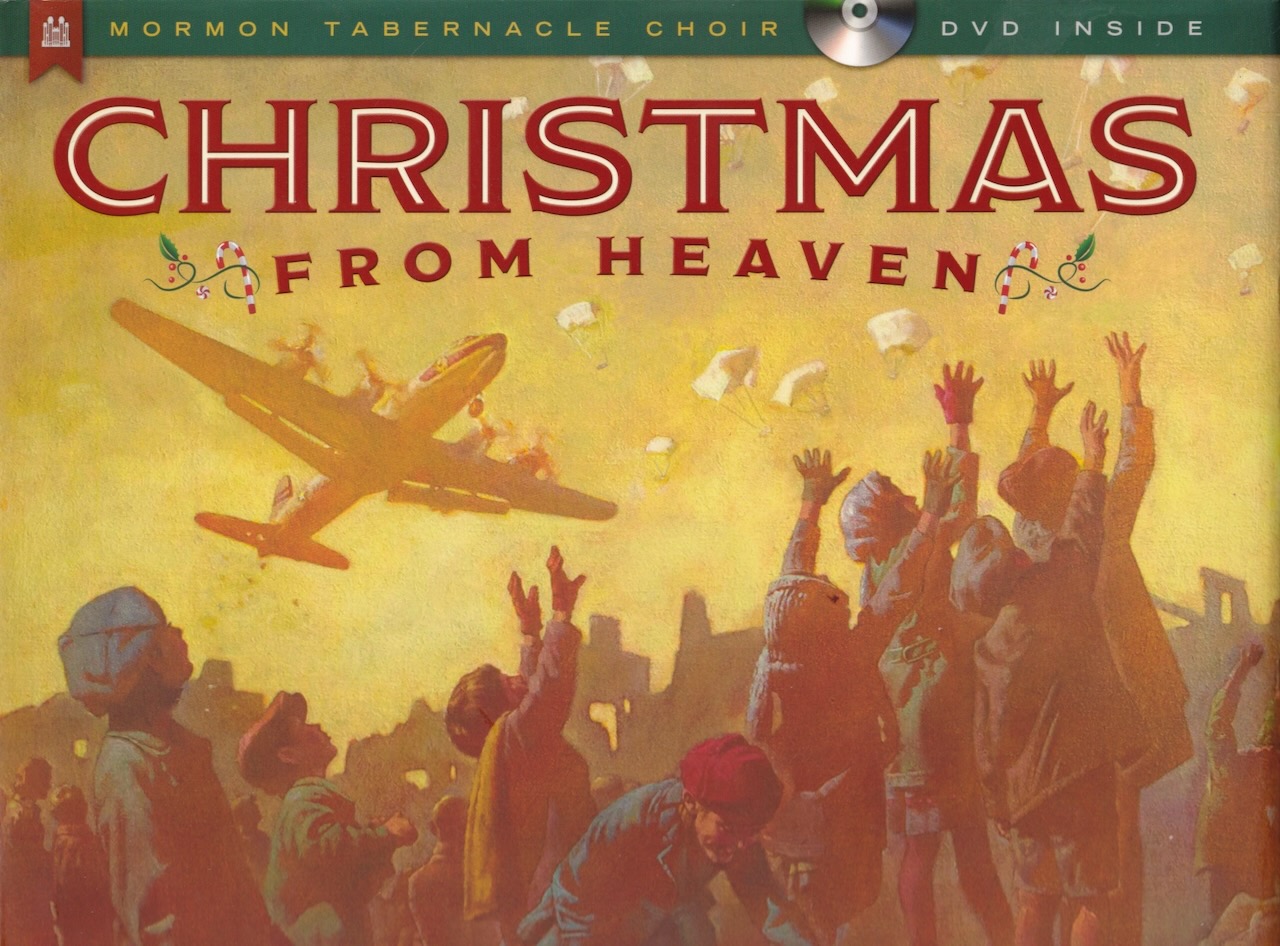
Title: Christmas From Heaven: The True Story of the Berlin Candy Bomber
Author: David T. Warner
Illustrator: Robert T. Barrett
Year Published: 2013
Length: 32 pages
Below is one suggestion for your week with the book Christmas From Heaven. Please experiment with what works for your family! (Note: not all activities are included in the suggested sample week below).
toc: "American Heritage Songbook: _God Bless America_"
time: 5 minutes
freq: daily
God bless America, land that I love Stand beside her and guide her Through the night with the light from above
Irving Berlin, one of America’s greatest songwriters, wrote God Bless America and Kate Smith made it famous in 1938 when tensions were mounting between Axis and Allied countries, shortly before World War II. Berlin wrote it initially as a prayer to God to guide America to peace through the turbulent times.
God Bless America was the official campaign song for both Franklin Delano Roosevelt and his Republican opponent Wendell Willkie in 1940. In the wake of the September 11, 2001 terrorist attacks, members of Congress sang it on the steps of the Capitol. Both Celine Dion and LeAnn Rimes released versions of it in October of 2001 that charted more than 60 years after its debut (Dion’s reached #14 on Adult Contemporary, Rimes #50 on Country). This 2013 version by Sandi Patty includes the original introduction with its allusion to the beginnings of World War II (“while the storm clouds gather, far across the sea”) and makes the prayer explicit (“as we lift our voices in this solemn prayer”).
To keep it fresh for your child(ren), try playing a different version each day before (or after) the reading.
time: 20-40 minutes
prep: 5-15 minutes
supplies:
Without a word, the four children tore the gum wrappers into strips and passed them to the others. One by one, each small nose was pressed to the paper, breathing in the minty smell.
Make a list of the candy names available locally (or order what you need). Then write a story inserting the candy names. Use cardboard and a sharpie to write up the story and tape the candy bar in place for the word. This can be a fun gift. Here is an example story: Once upon a time there was a fun family who went on a journey through the Milky Way. The family was full of Smarties and Nerds. They built a rocket powered by Atomic Fireballs and hoped it wouldn’t be a Milkdud. They went into Orbit and saw an Eclipse, a Starburst, Mars, and a planet with Peach Rings. The trip brought the Kinder Joy. The rocket Dove back to earth and thankfully they didn’t need any Lifesavers. The Junior [mints] thought the trip was worth 100 Grand. The End.
time: 15-60 minutes
supplies:
When World War II had ended three years earlier, Germany and its capital city were divided between the Western allies and the Soviet Union.
There is a map of East and West Germany in the front of the book. Explain how Germany was divided into four sectors after losing World War II, with different allies (Americans, British, French, Russians) controlling different sectors. In particular, point out how Berlin, the capital of Germany, was located deep in East Germany and the city was also divided into four sectors controlled by different allies. Conclude the discussion by watching a video of the fall of the Berlin Wall which marked the end of the Cold War and the beginning of the reunification of Germany, 40 years after the Berlin Airlift.
time: 5 minutes
freq: once
I believe it must be the policy of the United States to support free peoples who are resisting attempted subjugation by armed minorities or by outside pressures. I believe that we must assist free peoples to work out their own destinies in their own way. I believe that our help should be primarily through economic and financial aid which is essential to economic stability and orderly political processes. – President Harry S. Truman
In the aftermath of World War II, the Soviet Union attempted to spread communism by pressuring and influencing many devastated European governments. The Soviets wanted to build a buffer zone of countries that were friendly or under their direct control. In March of 1946, Winston Churchill warned the United States about an “iron curtain” descending across Europe, with the communists controlling eastern European countries behind the curtain.
Just a year later, in March of 1947, President Harry Truman addressed a joint session of Congress to advocate for what became known as the Truman Doctrine: the containment of the Soviet bloc and stopping the spread of communism through economic aid to western European countries — starting with Greece and Turkey as this historic video shows. Historians date the beginning of the Cold War to these two speeches by Churchill and Truman.
The Marshall Plan, economic aid to the war-torn western European countries, began on April 3, 1948. The Soviets blockaded Berlin on June 24. Two days later, the Berlin airlift began, a joint operation of Americans, British, and French.
time: 20-30 minutes
prep: 10-15 minutes
supplies: cookie tray, pretzel twists, chocolate candy kisses, M&Ms
By December, the Little Vittles operation had gathered eighteen tons of candy from American candy makers, and three more tons came in from private donors. The spirit of Christmas was descending on people everywhere, lifting them up in the joy of giving.
time: 20-30 minutes
prep: 10-15 minutes
supplies: sugar, corn syrup, heavy cream, butter, vanilla, pan, pot. wooden spoon, candy thermometer, wax paper
These children had little to eat, and no candy at all, yet they were grateful for what the airlift had given them and asked for nothing. Their gratitude melted Hal’s heart.
time: 10-20 minutes
prep: 5 minutes
supplies: tissue paper, string, candy
By the next day, Hal had secretly enlisted his crew to donate their rations and make parachutes from handkerchiefs.
The book has excellent directions in the back for making your own candy bomb parachutes. Our kids really enjoyed making these. The colorful tissue paper for the canopies was a big hit (our three-year-old wanted to make all the pink ones): “Not only do they work, they’re beautiful!” And of course, who doesn’t love a craft where candy is involved?
For science, we did a couple demonstrations of falling objects. Using a small candy and a big candy (without parachutes) we showed how they both fell at approximately the same rate. Then we dropped a candy at the same time as we dropped one with a parachute and discussed how air resistance slows a falling object.
toc: "Re-enactment: Candy Bombing"
time: 20 minutes
prep: 5-10 minutes
supplies: parachute, candy
With the precision of bombardiers, the airmen pushed the candy out the flare chute, and white canopies floated to earth. The children ran with open arms to catch the treasures.
This re-enactment can be the culmination of previous activities: rationing, make your own parachute, paper airplanes. Start by opening a pack of gum and giving your kids some gum wrappers to smell. Then, you will need a high place to launch your paper airplane bombers and candy parachutes. We planned to launch our “candy bombs” from our second-floor patio deck but rain forced us to do an indoor launch from the top of the stairs. But you can pretty much count on happy kids any time you parachute candy to them :-)
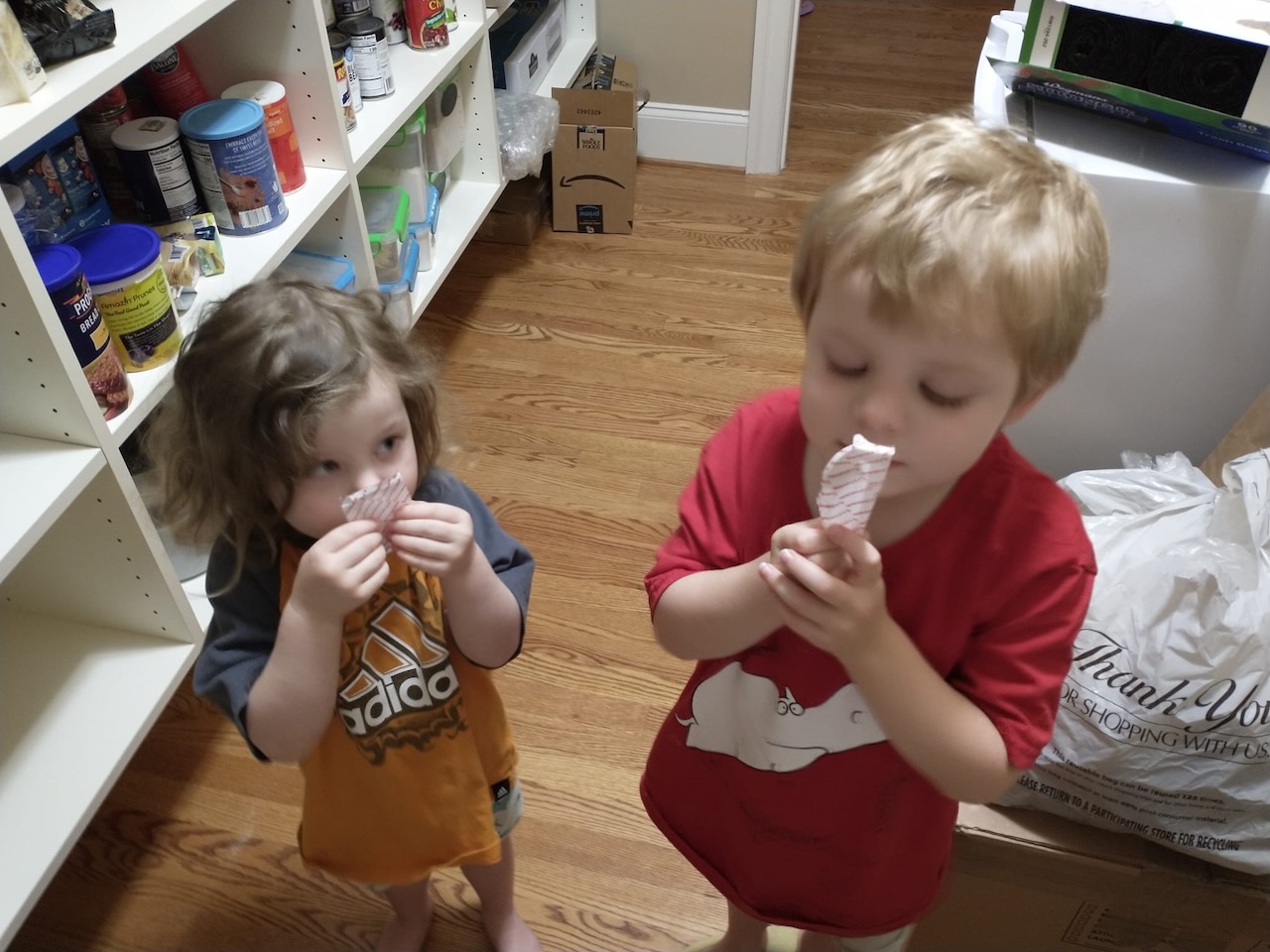
Smelling gum wrappers.
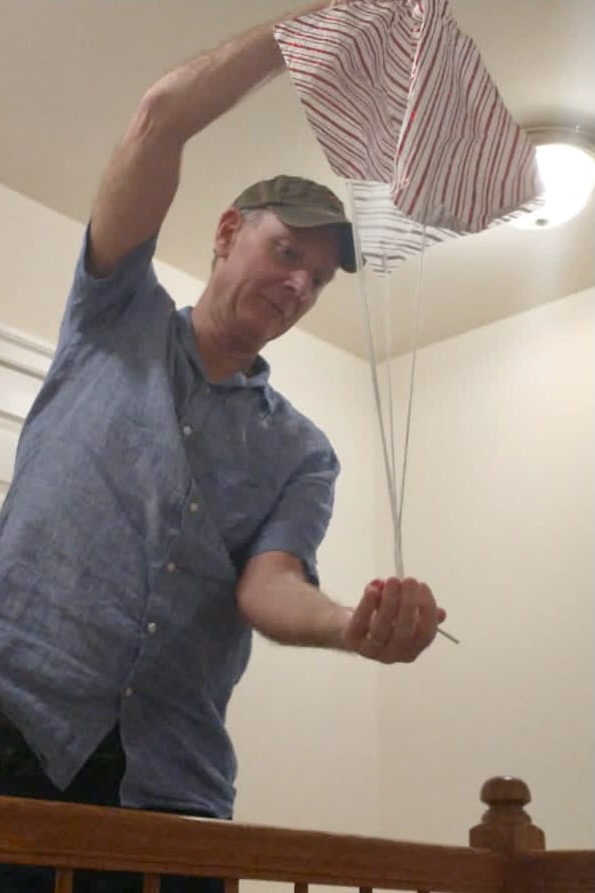

We candy bombed inside because of rain.
time: 15 minutes
Mercedes fed each chicken a worm and tried not to cry. She loved her four feathered pets, but Mama would not be happy. Eggs were more precious than gold in West Berlin during the Russian blockade.
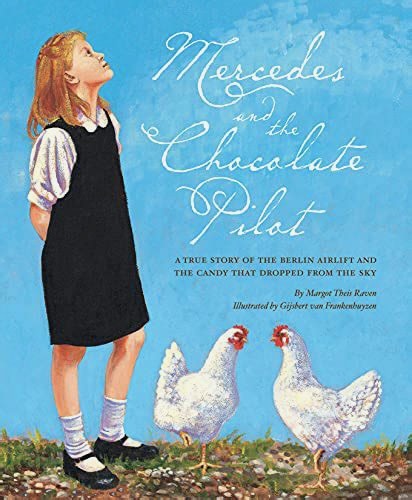
Title: Mercedes and the Chocolate Pilot
Author: Margot Theis Raven
Illustrator: Gijsbert van Frankenhuyzen
Year Published: 2002
Length: 48 pages
Introduce your child(ren) to the literary concept of “point-of-view.” In Christmas From Heaven the story is told from the point-of-view of the Candy Bomber. All the action revolves around his actions and how he sees things. Read Mercedes and the Chocolate Pilot to your child(ren) and then ask them who does all the action revolve around? Who is the main character? Through whose eyes do we see the story?
time: 15 minutes
“America?” exclaimed Katje. “Who would send me a box from America?”
“The Children’s Aid Society,” replied the postman. “Children in America are collecting and mailing many hard-to-find items to the children of Holland. You, young miss, were lucky to get one.”
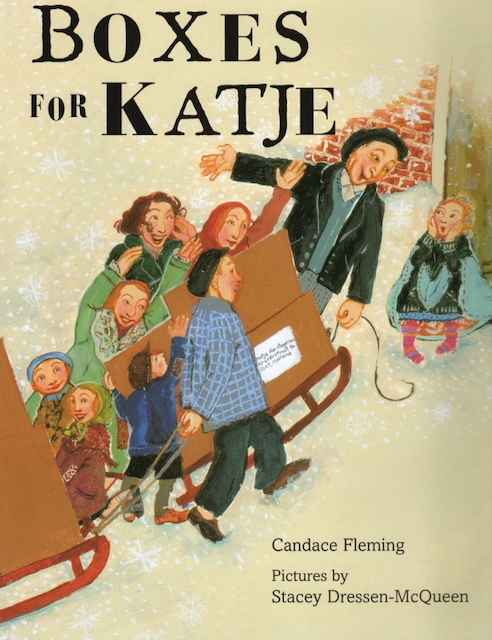
Title: Boxes for Katje
Author: Candace Fleming
Illustrator: Stacy Dressen-McQueen
Year Published: 2003
Length: 40 pages
This is another wonderfully true story about American generosity in the wake of World War II. The war devastated Europe. Roads, bridges, buildings, railways were all bombed. Poverty was rampant and food was scarce. American charities, including the Children’s Aid Society, Red Cross, and Catholic Relief Services stepped up to help wherever they could. In 1945, Katje was the oldest daughter of a Dutch family and Rosie, the young American girl, was the author’s mother.
This story shows how even the generosity of children can make a huge impact. Show your children how they can be just like Rosie by helping children around the world with Operation Christmas Child.
time: 10 minutes
In everything I did, I showed you that by this kind of hard work we must help the weak, remembering the words the Lord Jesus himself said: ‘It is more blessed to give than to receive.’
Why do we give gifts at Christmas? Where did this tradition come from? Share the story of the three wise men bringing gifts to Jesus at his birth and read them the following scripture: “They [the Magi] opened their treasures and presented him [the Christ] with gifts of gold and of incense and of myrrh” (Matthew 2:11). At Christmas we now give gifts blessing each other as the Magi blessed the Christ child.
Ask your children why does the Bible say it is more blessed to give than to receive? Then, ask them to memorize this fragment of scripture.
time: 10 minutes
Hal wrapped his hands around the yoke of his C-54 cargo plane, packed with 20,000 pounds of flour.
The author uses a number of words associated with airplanes that your child(ren) may not be familiar with: yoke, cockpit, runway, canopy, parachute. In addition, there are some words out of the ordinary that they may not have encountered: bombardier, rations, squabble. Try introducing a couple of new words each day. Before you start reading, introduce the words you’ve selected for the day, define them, and then point them out during the reading.
time: 10 minutes
supplies:
Hal and his buddies were as excited as the children. The thrill of giving was irresistible. Soon they were dropping parachutes every day – hundreds of them.
The concept that there are children now in our world without enough food, let alone candy, was an astonishing one to our five- and three-year-old grandchildren. I asked them how Hal felt when he gave his candy parachutes to the children. “Joyful” was their response.
As the scripture above says, it is more blessed to give than receive. One way to connect your children to this blessing is through Operation Christmas Child, an annual Christmastime charity sponsored by Samaritan’s Purse. It is a group activity at our church where we fill shoeboxes with toys, gifts, candy, and hygiene products for children. It is often the only Christmas gift the recipient gets – again quite an eye-opener to our youngsters. This charitable activity provides a good connection to the story.
time: 10 minutes
supplies:
The Berlin Airlift of 1948-1949 is still one of the greatest humanitarian missions the world has ever known. Like a great sky bridge, airplanes flew 24 hours a day, three minutes apart, to feed 2.2 million people for 15 desperate months.
It is difficult to imagine the logistics required to pull off this humanitarian miracle. Ask your kids to calculate how many planes landed in:
time: 10 minutes
supplies:
These children had little to eat, and no candy at all, yet they were grateful for what the airlift had given them and asked for nothing. Their gratitude melted Hal’s heart.
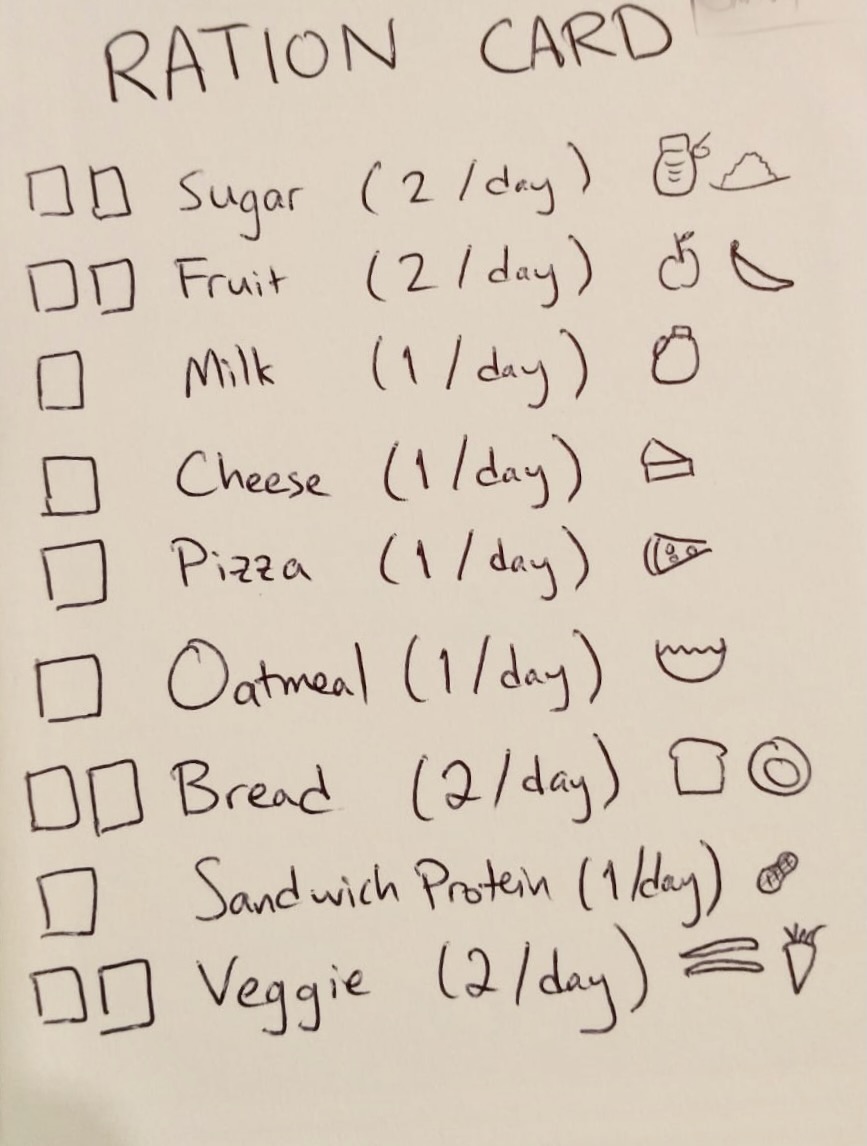
Identify some of your kids’ favorite foods and prepare ration cards or coupons that they can use to claim them throughout the day. To drive home the idea of rationing, make sure that the coupons don’t allow them to claim as much as they want or usually eat. We did this as a family. Everyone was a West Berliner for the day with ration cards. At mealtimes, we punched everyone’s card to indicate they had had their ration for the day (note: rations were in units of servings). Our five-year-old looked at his ration card and then planned what he was going to eat for each meal of the day. (To soften this exercise, it might be good to schedule the candy bombing reenactment for the evening, signaling an end to rationing and the arrival of the Americans).